
Symptom Action Guide
This page is not a diagnosis table and is not medical advice. It only helps families choose the next action: emergency care, contact a clinician soon, or record and watch. If red flags are present, or you cannot judge whether waiting is safe, call 911 or local emergency services, go to an emergency department, or use another local medical triage entry point.
Already Red?
If there is chest pain or tightness, possible stroke, severe trouble breathing, altered consciousness, uncontrolled bleeding, severe allergic reaction, poisoning or serious injury, self-harm or suicide risk, or pregnancy/postpartum danger signs, do not read the whole table first. Call 911 or local emergency services, go to an emergency department, or contact a local medical entry point directly; if you need the minimal script, use Red Flags.
Symptom quick reference is not for deciding "what disease is this." It is for deciding "what should we do now?"
Red Flags already handles red situations. This page mainly handles the more common moments: no obvious emergency at first glance, but the family is still unsure whether to seek emergency care, contact a clinician soon, or record and watch briefly.
30-Second Sort
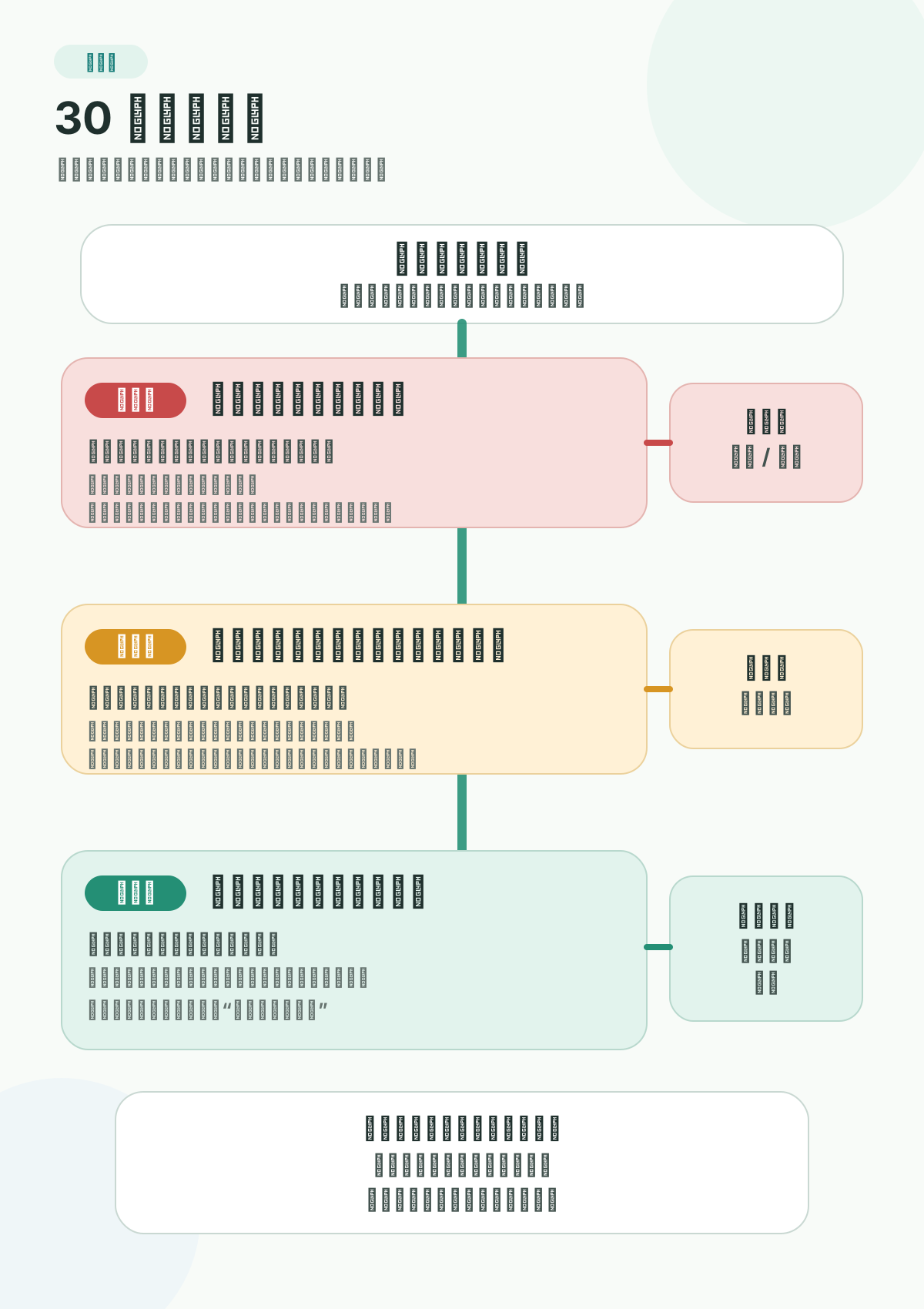
When reading this chart, remember three rules:
- If the first question is positive, do not move to the next two questions.
- For higher-risk people, unclear causes, or a strong family sense that something is wrong, do not stop at green.
- Green observation is not a safety verdict. It is short-term recording only after the first two layers do not apply.
If the person is an infant, pregnant or postpartum, an older adult, immunocompromised, or has serious heart, lung, kidney, liver disease, diabetes, cancer treatment, recent surgery, or anticoagulant use, read the same symptom more cautiously.
Green observation should only be used when the situation is low risk, brief, and improving. If you cannot explain why waiting is safe, do not observe just to "watch first."
When Observing, Set Upgrade Conditions First
Green observation is not "do nothing." If you decide to record and watch, agree at the start what changes will upgrade the situation.
| What appears during observation | Upgrade to |
|---|---|
| New chest pain or tightness, trouble breathing, altered consciousness, one-sided weakness/numbness, uncontrolled bleeding, severe allergic reaction, self-harm risk, or other red flags | Red: get help first; use Red Flags if you need the minimal script |
| Symptoms worsen, recur, or become clearly different from usual | Yellow: contact a clinician or triage entry point soon |
| Symptoms affect drinking, eating, sleeping, walking, caregiving, work, school, urination, bowel movement, or basic activity | Yellow |
| The person is an infant, pregnant/postpartum, older adult, immunocompromised, recently had surgery, uses anticoagulants, or has serious chronic disease | Yellow sooner |
| A clinician already gave return precautions and they are triggered | Follow the clinician's instructions |
Three Action Levels
Emergency care
What you see: red flags, rapid worsening, unsafe mental state, or a situation where time may change outcome.
Family action: call 911 or local emergency services, go to an emergency department, contact crisis services, Poison Control, or the local urgent medical entry point.
Do not: wait for group-chat votes, search for a disease name first, or let a very unwell person drive themselves.
Contact a clinician soon
What you see: persistent, recurring, worsening, new, unclear, or function-affecting symptoms without an obvious red flag.
Family action: prepare a symptom timeline, medication list, relevant records, and 1-3 questions.
Do not: explain it away only because the person can still tolerate it.
Record and watch
What you see: mild, short, improving symptoms, no red flags, no higher-risk context.
Family action: rest, reduce triggers, record what happened, and set upgrade conditions.
Do not: treat observation as ignoring, or stack over-the-counter medications, supplements, herbs, or home remedies without checking safety.
Ask Six Things About The Symptom First
When family says "I feel unwell," what is easiest to miss is not the disease name. It is the facts.
These six questions are not for diagnosing at home. They help describe the symptom clearly. Red situations still seek help first; questions must not delay emergency care.
| What to ask | How to ask | What to record |
|---|---|---|
| When did it start? | "About what time? Suddenly or gradually?" | exact time, sudden/gradual, first time or recurring |
| Where is it? | "One spot, a wider area, or moving somewhere else?" | location, range, radiation or movement |
| What does it feel like? | "Pressure, tightness, stabbing, burning, cramping, numbness, spinning?" | type of discomfort |
| How long and how often? | "Constant or coming in waves? More frequent than before?" | duration, frequency, trend |
| What changes it? | "Activity, rest, posture, eating, bathroom, medication?" | triggers, relief, what has been tried |
| What comes with it? | "Shortness of breath, sweating, fever, confusion, bleeding, weakness?" | associated symptoms, especially red flags |
If the person cannot explain clearly, ask someone nearby to add what looks different from usual: color, speech, walking, breathing, alertness, and behavior.
Ask Common Symptoms This Way
These prompts are for adult children, partners, or caregivers using phone, video, or in-person conversation. Their goal is to guide description, not to let families diagnose on their own. Open the parts you need; you do not need to read the page from top to bottom.
Chest pain, chest tightness, palpitations, shortness of breath
First ask:
- Is it pressure, squeezing, tightness, needle-like, point pain, or burning?
- Is it in one place, or does it go to the left arm, shoulder/back, neck, jaw, or upper abdomen?
- Does walking, climbing stairs, or emotion make it clearer? Does rest relieve it?
- Is there sweating, nausea, dizziness, shortness of breath, feeling of doom, or sudden unresponsiveness?
- Is there prior heart disease, high blood pressure, diabetes, high cholesterol, or anticoagulant, blood-pressure, or diabetes medication use?
Do not use "stabbing," "point pain," or "better after rest" to rule out a heart problem. If chest discomfort is persistent, repeated, comes with shortness of breath, sweating, nausea, or dizziness, or is clearly different from usual, treat it as red or yellow.
Headache, dizziness, and possible neurologic problems
First ask:
- Did it appear suddenly or gradually? Is it the worst headache of their life?
- Is there facial droop, one-sided weakness or numbness, slurred speech, trouble understanding, or vision changes?
- Is dizziness spinning, unsteady walking, or feeling about to faint?
- Is there fever with stiff neck, cannot wake up, obvious confusion, seizure, or head injury?
- Have there been similar headaches or dizziness before? What is different this time?
When stroke is possible, record the earliest time symptoms appeared. Even if symptoms improve, do not automatically treat it as fine.
Abdominal pain, vomiting, diarrhea
First ask:
- Where is the pain? Is it cramping in waves, or continuous and worsening?
- Is there vomiting blood, black stool, blood in stool, fever, fainting, chest pain, or clear weakness?
- How many times vomiting or diarrhea? Can the person drink? Is urination clearly reduced?
- What did they recently eat, was there alcohol, travel, or infection exposure?
- Is an older adult, child, pregnant/postpartum person, or person with underlying disease clearly worse?
If abdominal pain is severe, continuously worsening, or comes with bleeding or dehydration signs, do not suppress it with painkillers or home remedies.
Fever, infection, and clearly worse general condition
First ask:
- What is the temperature, and how long has it lasted? Any chills, cold clammy skin, or extreme weakness?
- Is breathing faster, and can the person speak and move normally?
- Compared with usual, is there confusion, sleepiness, or slower response?
- Is there pain with urination, worsening cough, rash, red/swollen wound, or severe pain?
- Is there higher-risk background: older adult, immunocompromised, recent surgery, cancer treatment, diabetes, kidney disease?
When infection is followed by the whole person becoming clearly worse, such as confusion, slow response, rapid breathing, cold clammy skin, extreme weakness, or much less urine, raise concern.
Falls, injuries, and pain
First ask:
- Did they hit the head, neck, or lower back? Was there brief loss of consciousness, vomiting, or seizure?
- Can they stand, walk, raise an arm, or grip objects now? Is there clear deformity, swelling, or worsening pain?
- Before an older adult fell, was there dizziness, chest tightness, palpitations, or sudden leg weakness?
- Are they taking anticoagulant or antiplatelet medications, or have they recently had surgery or osteoporosis?
- After the fall, compared with usual, has walking, speech, or response changed?
Older adult falls deserve cautious evaluation even when they look minor. Do not look only for visible injury.
How To Sort Common Situations
The following sorting does not try to be complete. It only covers situations that often make families hesitate.
| Situation | Red: get help now | Yellow: contact a clinician soon | Green: watch only if low risk |
|---|---|---|---|
| Chest pain, tightness, palpitations, shortness of breath | pressure/tightness, spreading pain, shortness of breath, sweating, nausea, dizziness, fainting, abnormal breathing | recurring chest discomfort, palpitations, shortness of breath with activity, new or different symptoms | brief, mild, clearly improving, no shortness of breath/fainting/sweating/spreading pain |
| Possible stroke or neurologic symptoms | sudden facial droop, one-sided weakness/numbness, slurred speech, confusion, vision change, severe dizziness, trouble walking, sudden severe headache | new numbness, weakness, imbalance, memory change, repeated falls, different from usual | brief mild symptoms with clear trigger; record and upgrade if repeated |
| Fever or infection | confusion, rapid breathing, cold clammy skin, extreme weakness, severe pain, low urine, rapid worsening | persistent or recurring fever, worsening cough, urinary pain, rash, wound infection, high-risk person | mild, improving, can drink, normal mental state |
| Headache or dizziness | sudden worst headache, neurologic signs, fever/stiff neck, head injury, confusion, seizure, fainting | new, persistent, recurring, different from usual, affects walking/vision/hearing | known mild pattern, improving with rest, no red signs |
| Abdominal pain, vomiting, diarrhea | severe or worsening pain, vomiting blood, black/bloody stool, fainting, severe dehydration, cannot keep fluids down | lasting or worsening symptoms, fever, low urine, older adult/child/pregnancy/chronic disease | mild, short, improving, able to drink |
| Fall, injury, sudden severe pain | head/neck/spine injury, suspected fracture, loss of consciousness, seizure, cannot walk, older adult with changed state | older adult fall, persistent pain, swelling, limited movement, anticoagulant use | minor bump, mild pain, normal movement, no worsening |
| Mental health crisis | self-harm, suicide, thoughts/plans/actions of harming others, unsafe impulses | anxiety, depression, insomnia, panic, mood problems affecting function or safety concerns | temporary distress with no safety risk and support available |
Preconditions For Handling At Home First
Many people most want to know "when can we handle this at home first?" That question matters, but it is easy to misunderstand.
More accurately: when can the family provide basic care and recording first, instead of immediately entering the medical system?
Usually, all of these need to be true:
- no red flags;
- not an infant, pregnant/postpartum person, older adult, immunocompromised person, or person with serious underlying disease;
- symptoms are mild, brief, and not rapidly worsening;
- the person can breathe, drink, communicate, walk, or perform basic activities normally;
- symptoms improve within a reasonable time;
- family members do not have a strong sense that "this person is not right."
If only some of these are true, do not classify it as green. Green observation also needs upgrade conditions from the start: when to review, what change means contacting a clinician, and what signal means emergency care.
At that point, do five things first:
- Stop possible triggers: intense activity, alcohol, sleep deprivation, irritating food, unsafe environment, and similar factors.
- Provide basic care: rest, hydration, ventilation, and a safe environment.
- Record change: start time, duration, associated symptoms, temperature, blood pressure, glucose, or other needed markers.
- Avoid unsafe stacking: do not combine multiple over-the-counter medications, supplements, herbs, or home remedies; ask a clinician or pharmacist if unsure.
- Set upgrade conditions: worsening, recurrence, new red flags, or failure to improve means contact a clinician or emergency care according to severity.
If the family is already panicking, do one three-minute stabilizing action: have the person sit or lie safely, stop dangerous activity, and have someone calmly ask start time, duration, chest pain or shortness of breath, not waking or clear confusion, severe pain, bleeding, facial droop, one-sided weakness, or abnormal speech. This is not treatment and not delay; it prevents missing a red signal in panic.
Higher-Risk People Move Up One Level
The same symptom means different actions in different people.
These people are better handled cautiously:
- infants and toddlers;
- during pregnancy and within one year postpartum;
- older adults, especially living alone, after a fall, with cognitive change, or with declining daily function;
- people on chemotherapy, immunosuppressive treatment, long-term steroids, or with weakened immunity;
- people with serious heart, lung, kidney, liver disease, diabetes, cancer, or blood disease;
- people using anticoagulant or antiplatelet medications, or after recent surgery, hospitalization, or injury;
- anyone whose clinician previously said certain symptoms must trigger care.
For these people, green more easily becomes yellow, and yellow more easily becomes red. Do not automatically downgrade because "this has happened before."
Next Step After The Quick Check
If red:
- call 911 or local emergency services, or go to the emergency department;
- if needed, return to Red Flags, bring only minimal information, and do not delay help to read tables;
- record earliest symptom time, especially for possible stroke;
- bring minimal information: conditions, medications, allergies, recent tests, emergency contact;
- do not leave the person alone or let them drive themselves when safety is uncertain.
If yellow:
- organize the symptom into a timeline;
- bring relevant lab, imaging, or visit reports, a medication list, and the 1-3 questions you most need answered;
- ask the clinician: what requires follow-up, and what requires emergency care;
- use the Doctor Visit Checklist when organizing questions.
If green:
- record symptoms and context;
- for long-term markers, use the Chronic Marker Log to see trends;
- keep this page and Red Flags in the family chat or health record front page.
References
As of 2026-06-28, this page mainly uses:
- MedlinePlus: Recognizing medical emergencies
- MedlinePlus: Chest pain
- CDC: Signs and Symptoms of Stroke
- CDC: About Sepsis
- American Heart Association: Heart Attack, Stroke and Cardiac Arrest Symptoms
- CDC HEAR HER Campaign: Urgent Maternal Warning Signs and Symptoms
- SAMHSA: 988 Suicide & Crisis Lifeline
- Poison Control: Poison Control
More source entries are in the source registry. The book's evidence rules are in the evidence policy.
One Sentence
The goal of symptom quick reference is not to make you go to the hospital less, but to reduce hesitation at critical moments and reduce panic when recording is enough for now.